
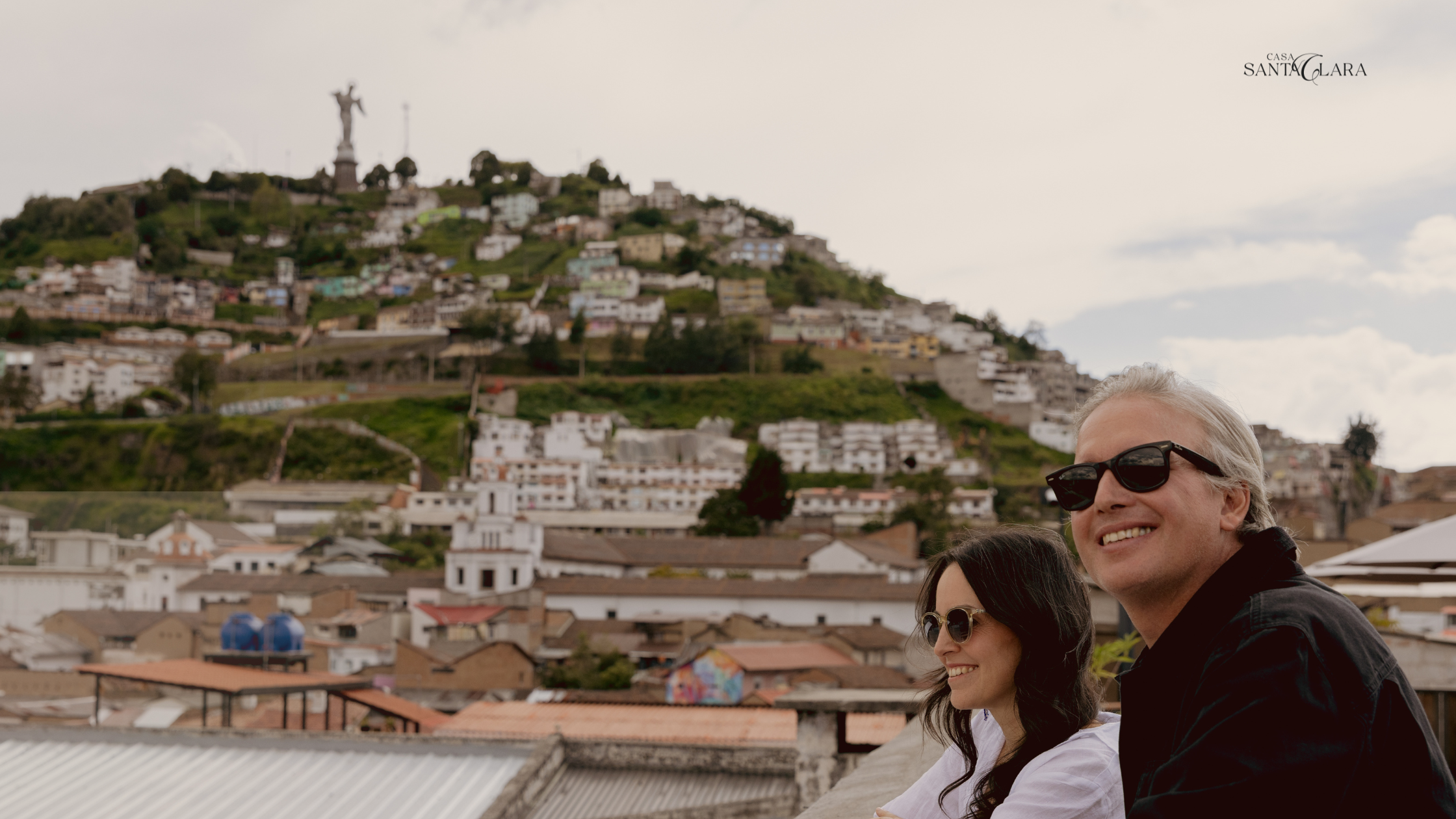
How Many Nights in Quito Before Galápagos?
Spend at least two nights in Quito before the Galápagos — three is better. Altitude adjustment, cultural immersion, and why staying in the Historic Center matters.
Read more
%201.svg)

.svg)
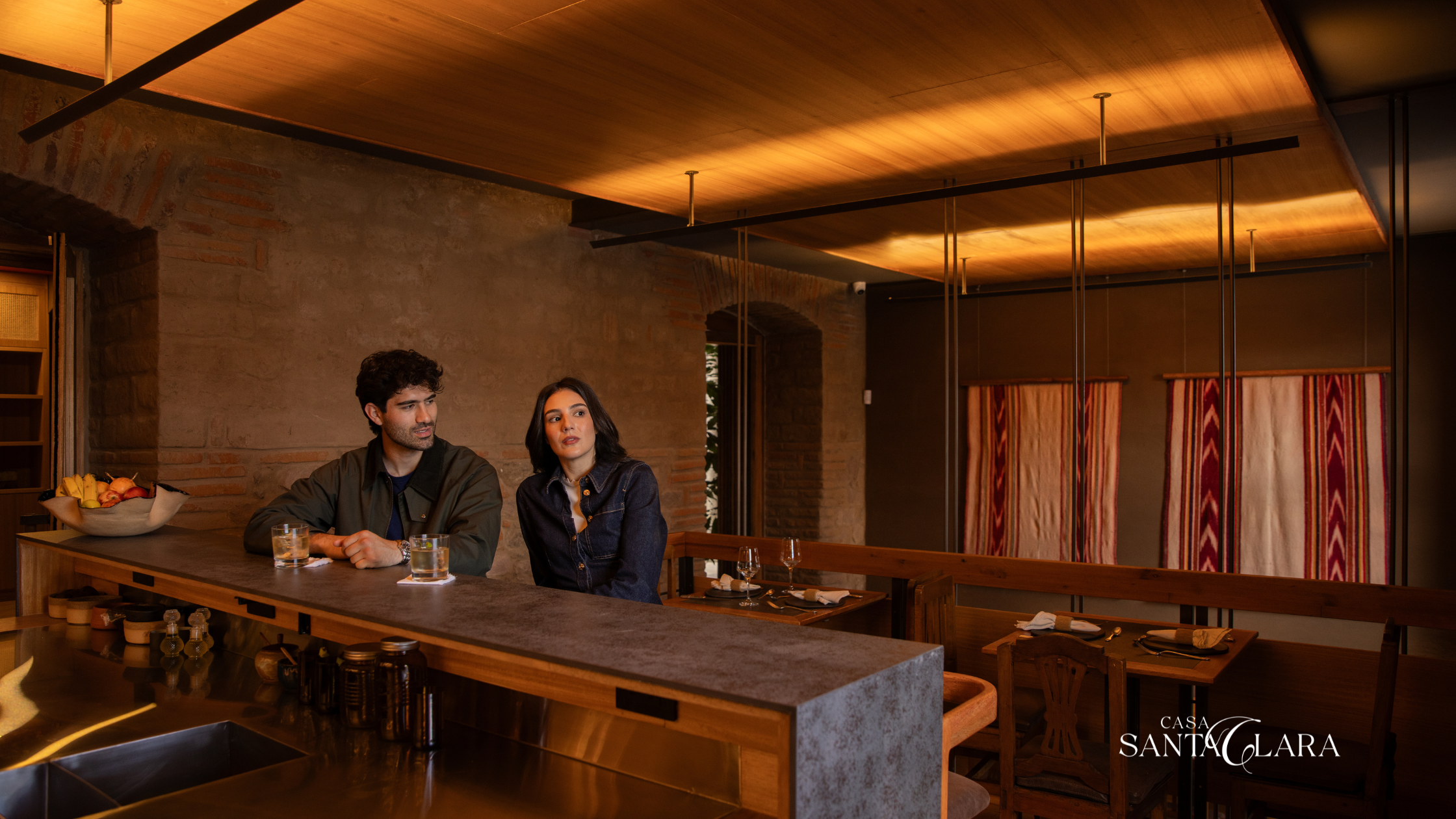
The concierge at a 300-room hotel fields forty requests a day. She coordinates with housekeeping, the restaurant kitchen, the front desk, the business center. Most guests she'll never meet. The ones she does meet, she forgets by the end of her shift.
The host at Casa Santa Clara might handle two guest requests in the same timeframe. She remembers that you take your coffee black. She knows your daughter is arriving tomorrow. When you mention offhand that you're looking for a particular 1960s recording, she thinks of someone who might have it. What you're paying a premium for, when you book a small hotel, is not thread count or bathroom fixtures. You're paying for what undivided attention costs.
This kind of attention doesn't come cheap. Here's why.
When you book a boutique hotel, you'll likely pay materially more per night than a comparable chain. Whether a boutique hotel is worth that premium depends on what you understand yourself to be buying — and what you're explicitly not buying.
Scale inverts everything about hotel operations. A large hotel distributes its fixed costs — the real estate, the permanent staff, the infrastructure — across hundreds of rooms. A small hotel spreads the same costs across five. That's the brutal math underneath the price difference.
But the math isn't just about revenue per room. It's about what becomes possible when a staff member isn't stretched across dozens of guests. Your preference for a quiet room doesn't get lost in a database. A last-minute dietary change isn't a special request that disrupts the kitchen's workflow — it's just routine. A guest who asks the host for a dinner recommendation doesn't get directed to a laminated list; they get a genuine opinion, informed by where that host actually eats.
This difference compounds across a stay. At a large hotel, you're part of a system. At a small one, you're part of a conversation.
This is worth stating clearly: the boutique premium is not paying for corporate overhead. There's no regional management layer, no brand licensing fee, no international marketing department, no standardized training program for five thousand properties in forty countries. There's no conference center that sits empty half the year, subsidized by room rates.
You're not paying for a consistent experience across a portfolio. (If that's what you want, a chain hotel delivers it better.) You're paying for the opposite: a place that can't be replicated, run by people who were hired for judgment rather than their ability to follow a manual.
The restoration of Casa Santa Clara won the Premio al Ornato — Quito's award for architectural preservation — not because the owners chose expensive finishes, but because they understood the building's original proportions and restored them faithfully. That kind of decision-making can't be franchised. It can't be licensed. It can't be systematized into a brand standard. It only exists in this place, with these specific people, in this restored 19th-century colonial home.
Small hotels hire for taste. They hire people who read, who notice things, who have opinions about music and food and what makes a neighborhood worth walking through. The people running the place recommend cafés they actually go to. The books on the shelf? Someone actually read them. The records playing? A deliberate choice, not a licensed soundtrack.
This curatorial sensibility shapes everything — what's recommended, what's possible, what kind of conversation you can have with the people running the place. It's harder to find, harder to sustain, and more expensive to maintain. Standardization is cheaper. Intentionality costs.
Here's what most travelers don't realize: flexibility is expensive. A large hotel can absorb a special request because it has systems and staff to handle exceptions. A small hotel can accommodate it because there are fewer requests competing for attention — but if those requests become numerous or complex, the intimate experience we're built for begins to unravel.
Slow travel changes this calculus. At a four- or five-night stay — or longer — the cost-per-day of that undivided attention becomes more defensible. You're not paying for indulgence; you're paying for a relationship with the place. That takes time to build.
Step into our patio at 8 AM on any morning and you'll see what a genuinely small hotel feels like — the space is quiet, unhurried, the coffee is poured without distraction. No one is rushing to clear your table for the next seating. Compare this to the same moment in a fifty-room hotel, where the lobby churns with arrivals and departures and bellhops and tour groups.
These are different products altogether — and they're designed for different travelers. One offers efficiency and choice. The other offers a particular kind of presence — the feeling of being somewhere specific, with people who are paying attention.
"Is a boutique hotel worth the price?" is the wrong question. The better one is: "Is this what I actually want from a stay?" If you're optimizing for lowest cost and maximum amenities, a chain hotel wins — and that's a legitimate choice. If you're looking for a generic comfortable night somewhere between the airport and a conference, that's fine. We're built for something different.
But if you travel to feel something — to understand a place, to move slowly, to have genuine conversations with people who live there — then you're not comparing prices. You're comparing experiences. And the economics of that are entirely different.
.svg)

%201.svg)
%201.svg)